Barchessa: Meaning, History and Function in the Venetian Villa
What is a barchessa: the meaning, the etymology, its original agricultural function and the role of the arcaded barchesse in the Venetian villa.
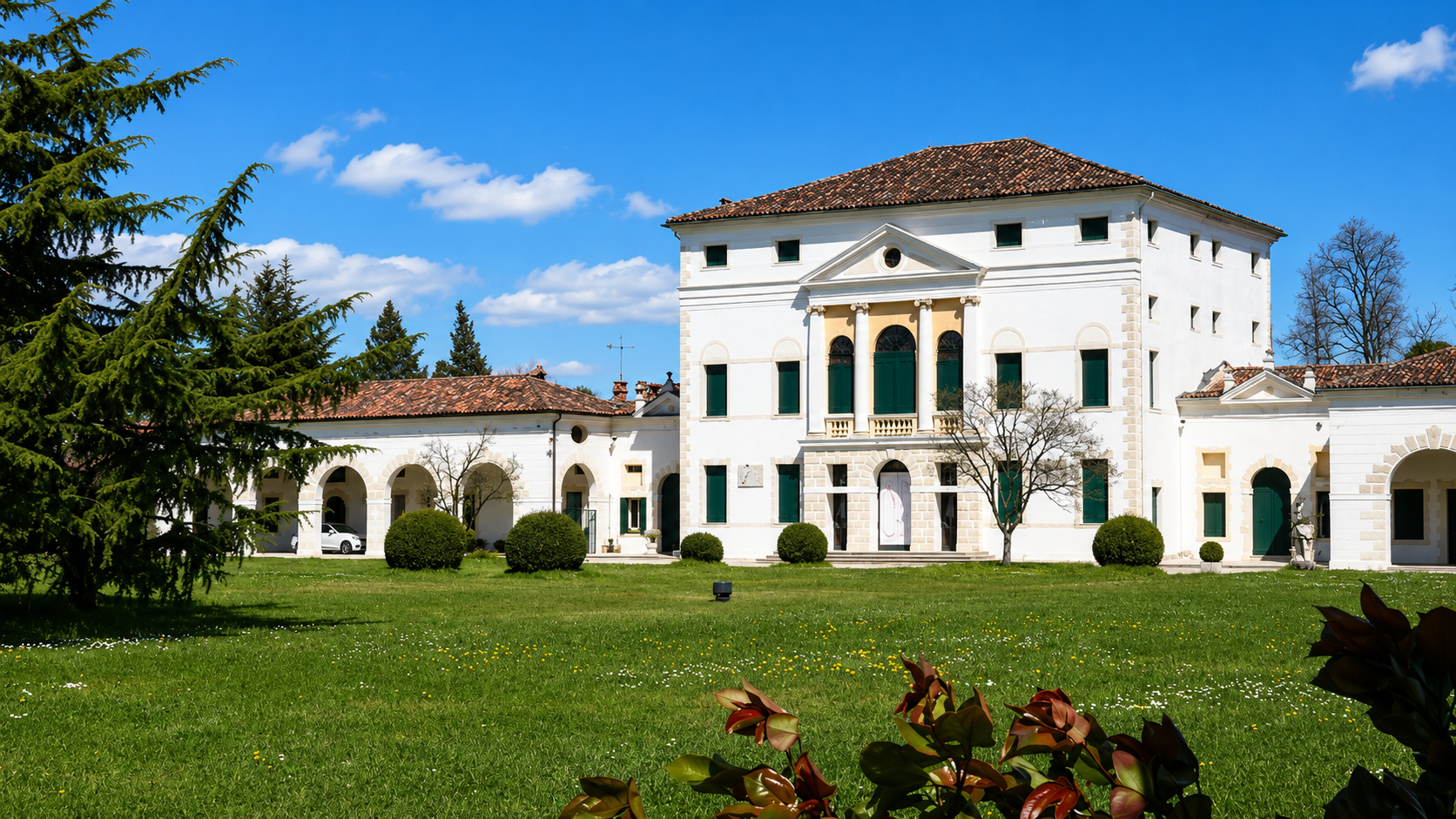
A barchessa is essentially a rural, covered side of a Venetian villa (a long structure with either arches or columns under an arcade) which housed the agricultural aspects of the estate. The term "barchessa" can be defined in one word as a 'service' building. It was here that tools, wagons, produce from the fields and at times livestock were stored. An understanding of what constitutes a barchessa helps interpret the entire function of a Venetian Villa, which was not simply a luxurious home for its owners but instead it served as the center point for their farming operation.
In brief
- The barchessa is the rustic, arcaded wing set alongside the main house of a Venetian villa.
- It served to shelter tools, carts, harvests and animals: it was the productive heart of the estate.
- Its recognisable feature is the portico of arches or columns, open toward the threshing yard or the park.
- Many villas have two, arranged symmetrically on either side of the central body.
- Today the restored barchesse host above all events, receptions and cultural activities.
Barchessa: etymology and meaning
In addition to having an unclear etymology, the word "barchessa" is based on barca (a pre-Roman term which signified a heap of sheaves and other field produce) according to Treccani's dictionary. As such, the relationship between the concept of storage and the loft for storing hay is a long-standing one. It would therefore be reasonable that the barchessa was created as a sheltering structure since this was clearly its purpose and function - rather than simply aesthetically pleasing. Eventually though, once Venetian villas were recognized as prestigious structures in architecture, barchesse came to receive formal design status and consequently were designed by those same architects who designed their respective villas.
To say "barchessa" today is thus to point to two things at once: a function (agricultural service) and a form (the long, arcaded building). The two dimensions are inseparable, and this is what makes the barchessa such a characteristic element of the Veneto landscape.
The original function: the agricultural heart of the villa
To get an idea of what a barchessa is, you have to think about what a true Venetian villa actually was. From the 15th century through to the 19th century the noble families of the Serenissima invested on their mainland estates turning them into large-scale farming systems. The villa was the central hub for management and production in these systems; the barchesse were essentially their engines that produced everything they needed.
Under their porticoes unfolded the working life of the estate:
- Shelter for tools and farm carts, protected from the weather.
- Storage of harvests: granaries, hay lofts and the produce of the fields.
- Stables and shelters for working animals, often in a separate body.
- Seasonal work, from threshing to winemaking, under cover of the portico.
The portico was no mere flourish: it allowed work to be done in the dry, carts to be loaded and unloaded sheltered from the rain, and air to circulate so that produce kept better. In a barchessa, beauty always springs from a concrete need.
The architecture: the portico of arches and columns
The element that makes a barchessa instantly recognisable is the portico: a succession of round-headed arches or columns running the whole length of the façade, open toward the threshing yard or the garden. Behind the portico lie the service rooms; above, often, a storage floor or a granary.
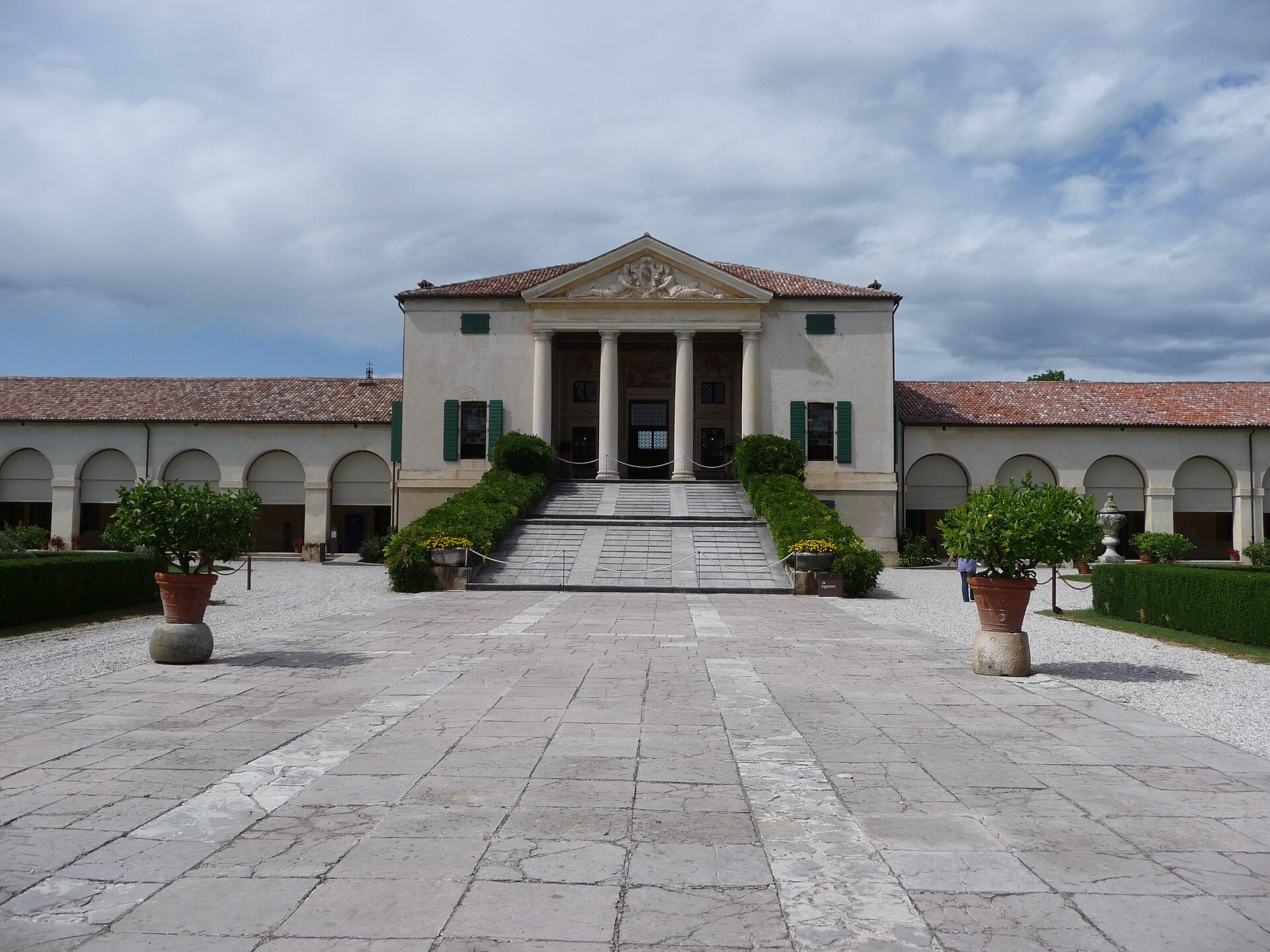
In his architectural designs, Andrea Palladio used the barchesse in the most beautiful way during the 16th century when he combined them with the rest of villa architecture; sometimes by using these structures as long arcaded arms for an opening courtyard. A well known example of this use is Villa Badoer at Fratta Polesine, which has the barchesse curves forming a semi-circle around the space before the main house.
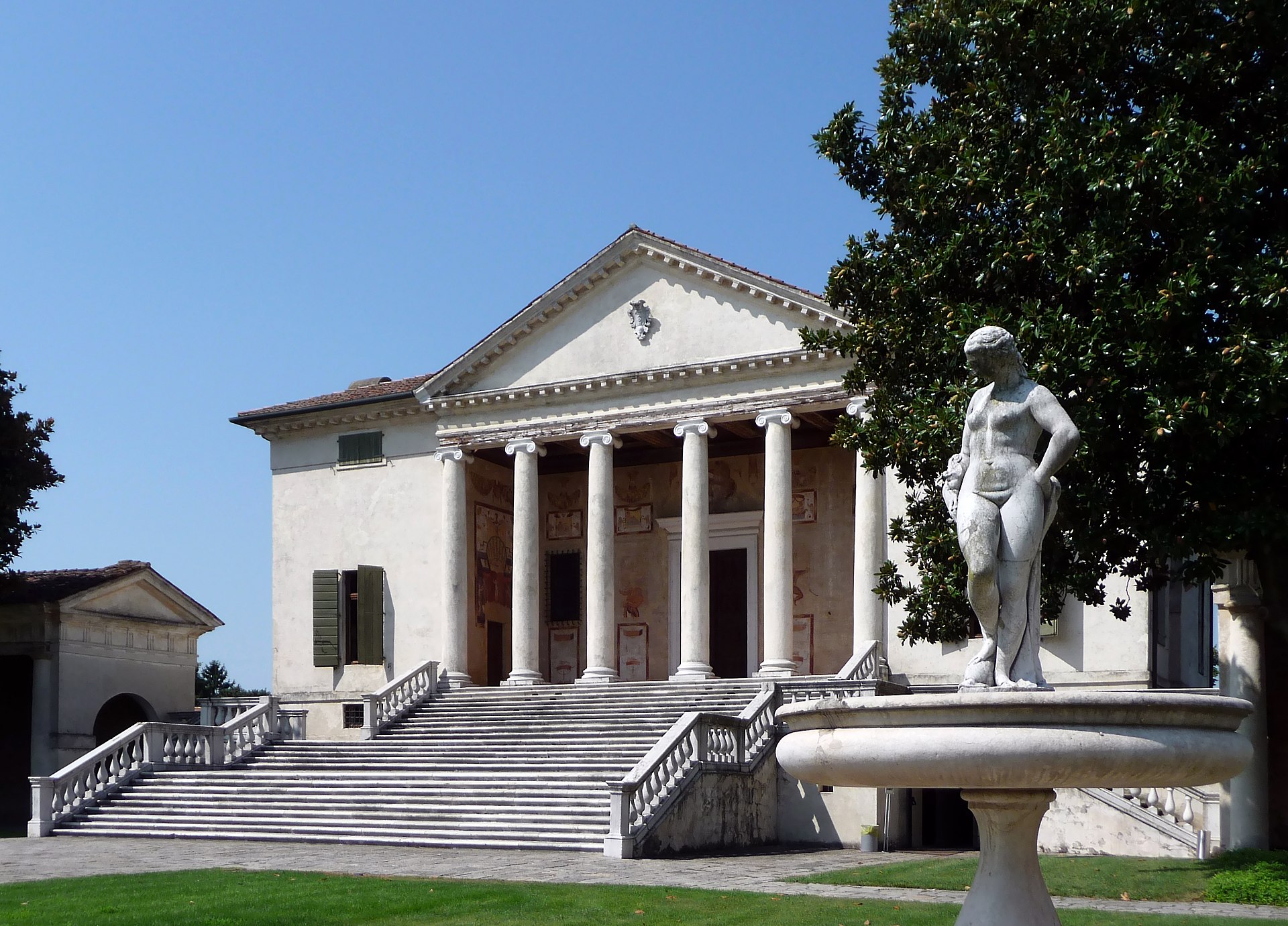 Photo: Marcok / Wikimedia Commons — CC BY-SA 3.0
Not all barchesse are Palladian, however. In the Treviso countryside many take plainer forms, with porticoes of low, segmental arches and local materials, but the logic remains the same: a service wing, orderly and airy, set alongside the residence.
The role within the system of the Venetian villa
In essence, a Venetian Villa is made up of separate elements each with a particular function. The central part contains the main house, i.e., the dwelling place for the owner and his family; while at both sides there are barchesse which were given over to work. Finally, we have the surrounding park, the chapel (oratory), and agricultural areas. By comparing these two parts, it becomes easier to understand their purpose.
| Element | Historical function | Use today |
|---|---|---|
| Main house | Owners' residence and place of prestige; frescoed halls, apartments | Visits, exhibitions, venue for prestigious events |
| Barchessa | Rustic service wing: shelter for tools, carts, harvests and animals | Spaces for receptions, weddings, exhibitions and cultural activities |
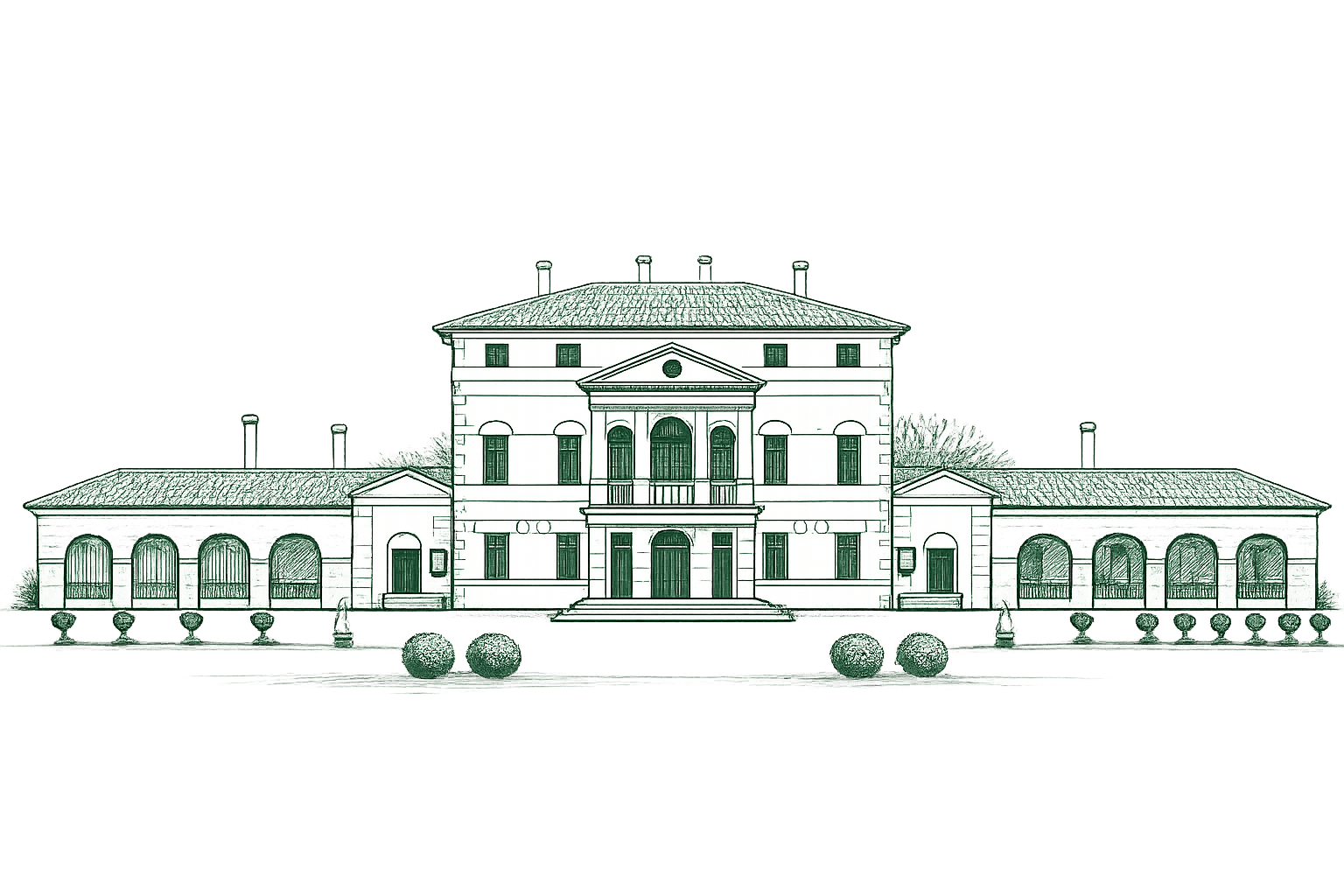
In addition to this symmetry of roles, there is also a physical symmetry: when a villa has two barchesse, they are positioned in mirror image form, with each on one side of the central part of the house; thus framing it. For additional information about the architectural model that gave rise to fame for these homes, check out our article on the Palladian Venetian villas; or if you want to go on a tour of all the houses that have public access, see the one on the Venetian villas to visit for your tour itinerary.
The barchesse today: the case of Villa Loredan
Villa Loredan Valier Perocco di Meduna, built in the Treviso countryside at Vascon di Carbonera, is a living example of how to make two arcaded barchesse (service wings), set on either side of the main house, serve as both service wings of the working farm and as porticos offering covered, light-filled spaces that can be used for receptions and ceremonies without altering the historic nature of the building.
The majority of those barchesse that survived will be found today in a state where once a workplace has evolved into an area for people to gather. They are welcoming to the public as much by virtue of their origins as workplaces, their space and their orientation toward the park as anything else. Anyone who would like to view them can trace the history of the villa or peruse our photo gallery.
FAQ
What exactly does "barchessa" mean? It means the rustic, arcaded wing of a Venetian villa, that is, the service building meant to shelter tools, carts, harvests and animals. The word, of uncertain etymology, is traced by the Treccani dictionary to barca, in the ancient sense of a heap of sheaves and field produce.
What is the difference between a barchessa and the main house? The main house is the owners' residence, often frescoed and given over to prestige; the barchessa is the working wing, plainer and opened by a portico. Together they form the typical system of the Venetian villa.
Why do many villas have two barchesse? Because the model of the Venetian villa is based on symmetry: two twin barchesse, set on either side of the main house, frame it and double the available service space. Villa Loredan, at Vascon di Carbonera, is one such example.
In summary
In addition to being the rustic, arched side of a Venetian villa, the barchessa (barchesse in plural) originated from the need to have storage space for farming equipment, wagons and crops; hence its characteristic colonnade or arcade. Thus, while typically considered secondary to the residential areas of the villa, the barchessa is actually the area that best defines the villa's true nature: a rural working farm before it ever became a place where people would live. Today, after restoration of many of these buildings, they have transitioned into event spaces for culture such as those located on either side of Villa Loredan’s central home.
Sources: Istituto Regionale per le Ville Venete (IRVV), Treccani Dictionary. Villa Badoer image: Marcok / Wikimedia Commons, CC BY-SA 3.0.
Would you like to see the Villa in person?
The Villa is a private residence. Visits and receptions in Vascon di Carbonera are arranged by appointment only.
Make an enquiry →