Palladian Villas: What They Are and Which to Visit
What makes a villa Palladian and which Palladian villas to visit: La Rotonda, Villa Barbaro, Villa Emo, La Malcontenta and Villa Cornaro.
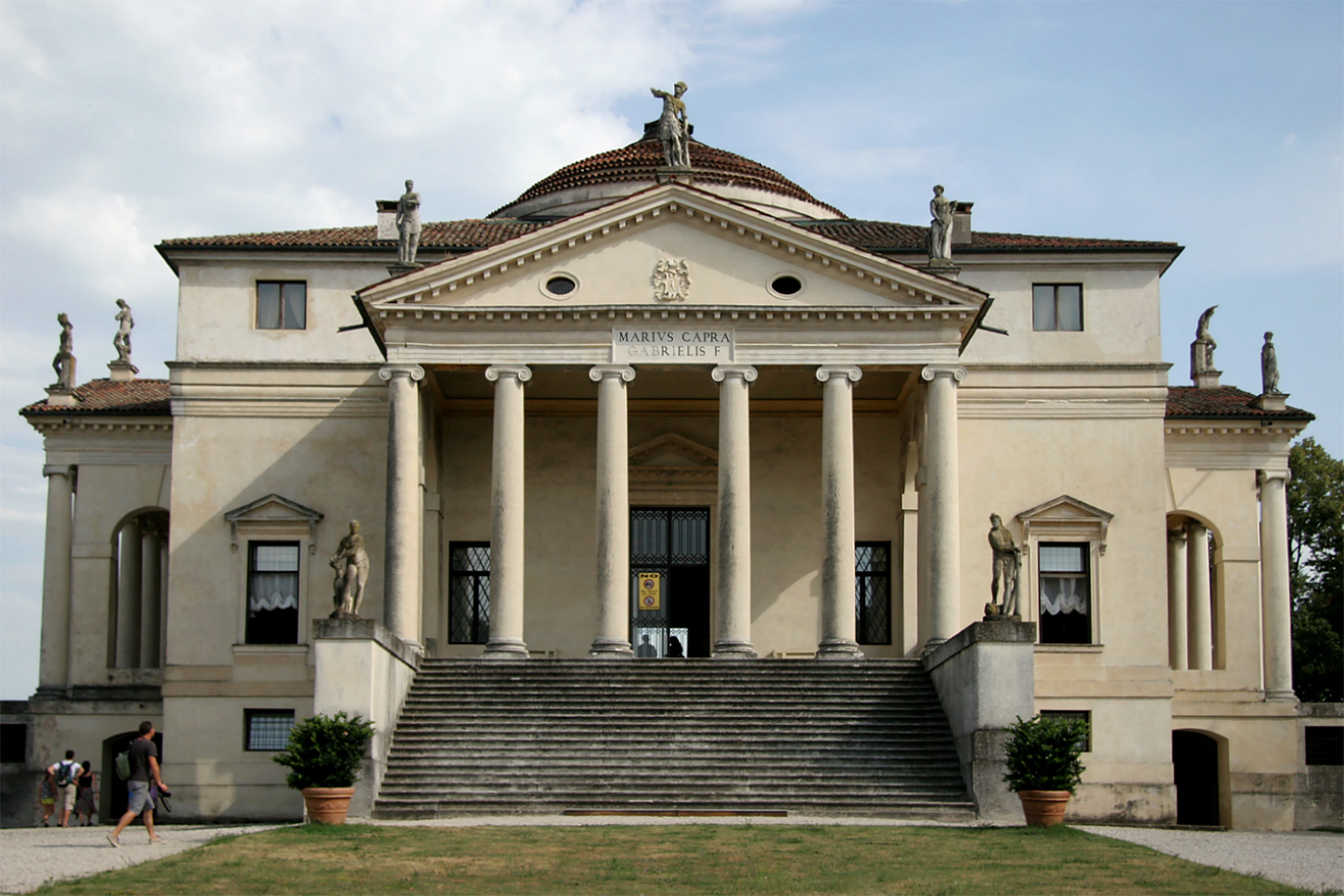
The Palladian villas are the rural homes designed by Andrea Palladio in the Sixteenth Century (or built with his guidelines): a compact main house; a portico that is crowned by a pediment like an ancient temple; and two wings on either side of the house known as barchesse, where all the farm related work would be done. These buildings were the most celebrated core of the Venetian Villas recognized as part of a World Heritage Site by UNESCO in 1996. They also represent thousands of villas throughout the Veneto region that have used them as their architectural foundation for building design. This guide will explain what constitutes a Palladian Villa and identify some key Palladio villas you should consider visiting.
In brief
- Palladio (1508–1580) established the model of the villa-farm: main house, portico with pediment, barchesse.
- Twenty-four Palladian villas have been a UNESCO World Heritage Site since 1996, within the property "City of Vicenza and the Palladian Villas of the Veneto".
- The essential ones: La Rotonda (Vicenza), Villa Barbaro (Maser), Villa Emo (Fanzolo), La Malcontenta (Mira), Villa Cornaro (Piombino Dese).
- The model spread everywhere: even "minor" villas such as Villa Loredan inherit its grammar.
What makes a villa Palladian
Before Palladio, Venetian villas were typically either fortressed buildings or unadorned farmhouses. The Vicentine architect Andrea Palladio (who was educated in the classical models and author of the Four Books of Architecture, 1570) developed an architectural form for this structure which would be both innovative and practical in its design. A number of repeated elements can be found throughout his designs:
- Main house: the central residential block, symmetrical, with a through-hall serving as the pivot of the whole composition.
- Pediment (triangular gable): set above the portico or pronaos, it openly quotes the front of a classical temple and ennobles the country house.
- Barchesse: the arcaded side wings, given over to stables, granaries and farm work, which link the dwelling to the productive landscape.
- Harmonic proportions: mathematical relationships between the rooms and absolute symmetry — the theoretical trait that turns every villa into a demonstration of order.
The Palladian villa is therefore not merely beautiful: it is a working farm ennobled by architecture, where display and production live under the same roof. It was this synthesis that would be imitated for three centuries.
The Palladian villas to visit
Five villas span the entire arc of Palladio's invention: from absolute geometric purity to fresco, from a river frontage to a monumental portico.
| Villa | Municipality | Distinctive feature | Visiting |
|---|---|---|---|
| Villa Almerico Capra "La Rotonda" | Vicenza (VI) | Central plan with four identical porticoes and a dome: the villa-temple | Interiors and garden open; check the days |
| Villa Barbaro | Maser (TV) | Frescoes by Paolo Veronese in the main house; still inhabited | Open on set days |
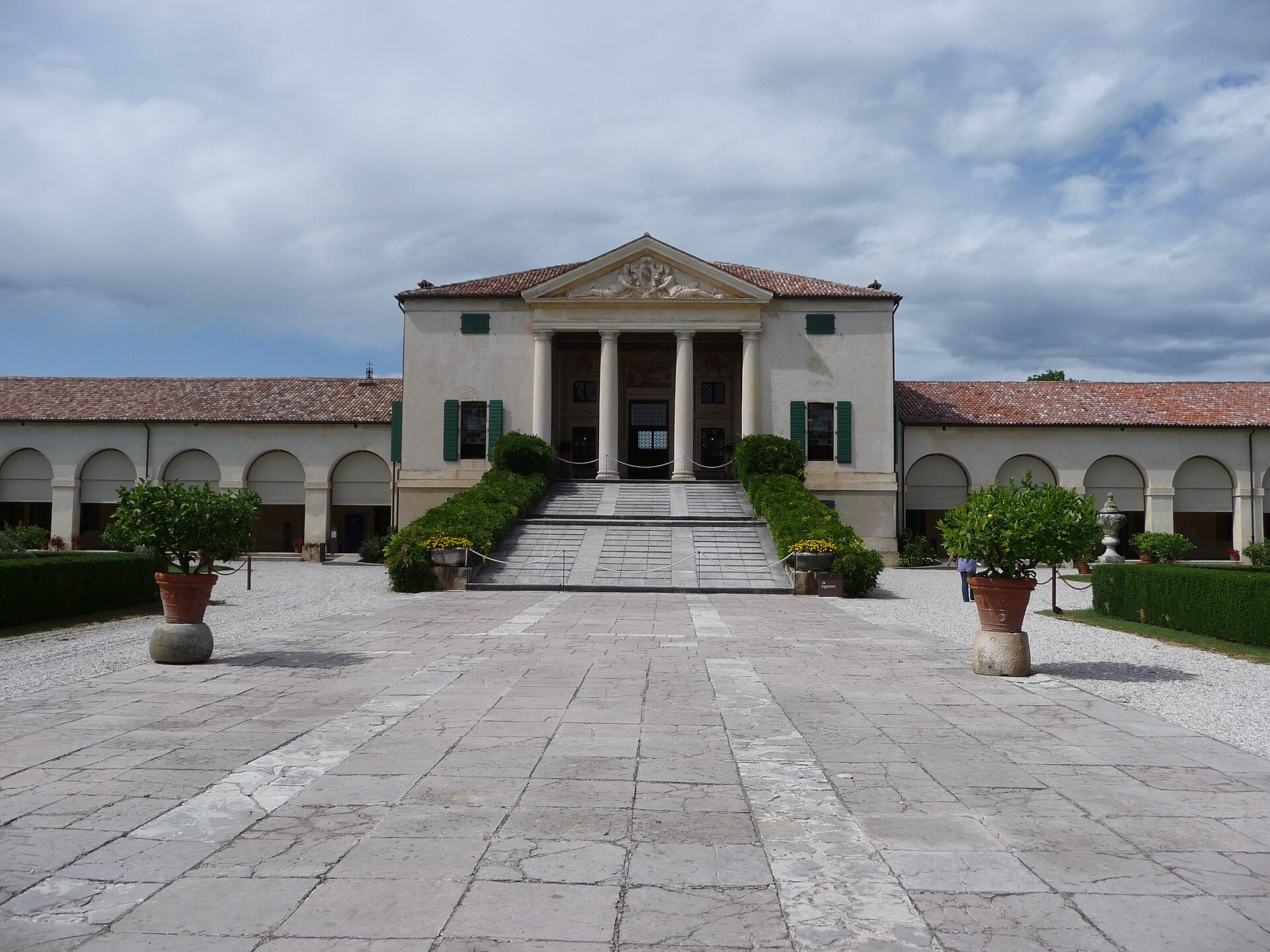
| Villa Emo | Fanzolo di Vedelago (TV) | The barchesse–main house model in its purest form, frescoes by Zelotti | Open to the public |
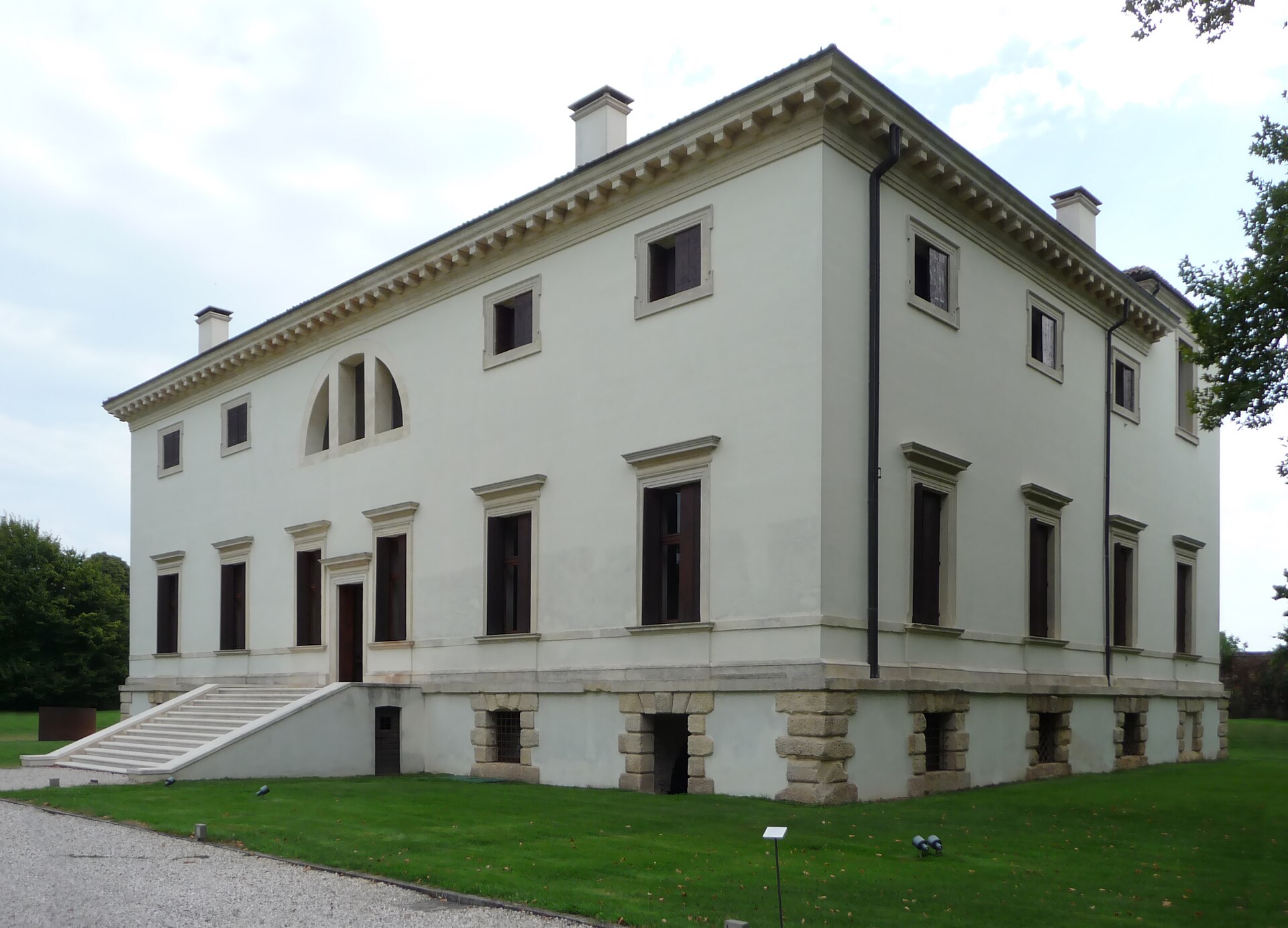
| Villa Foscari "La Malcontenta" | Mira (VE) | High base and Ionic portico facing the Brenta | Open on a seasonal calendar |
| Villa Cornaro | Piombino Dese (PD) | Double superimposed portico on the façade, an influential prototype | Open by appointment/season |
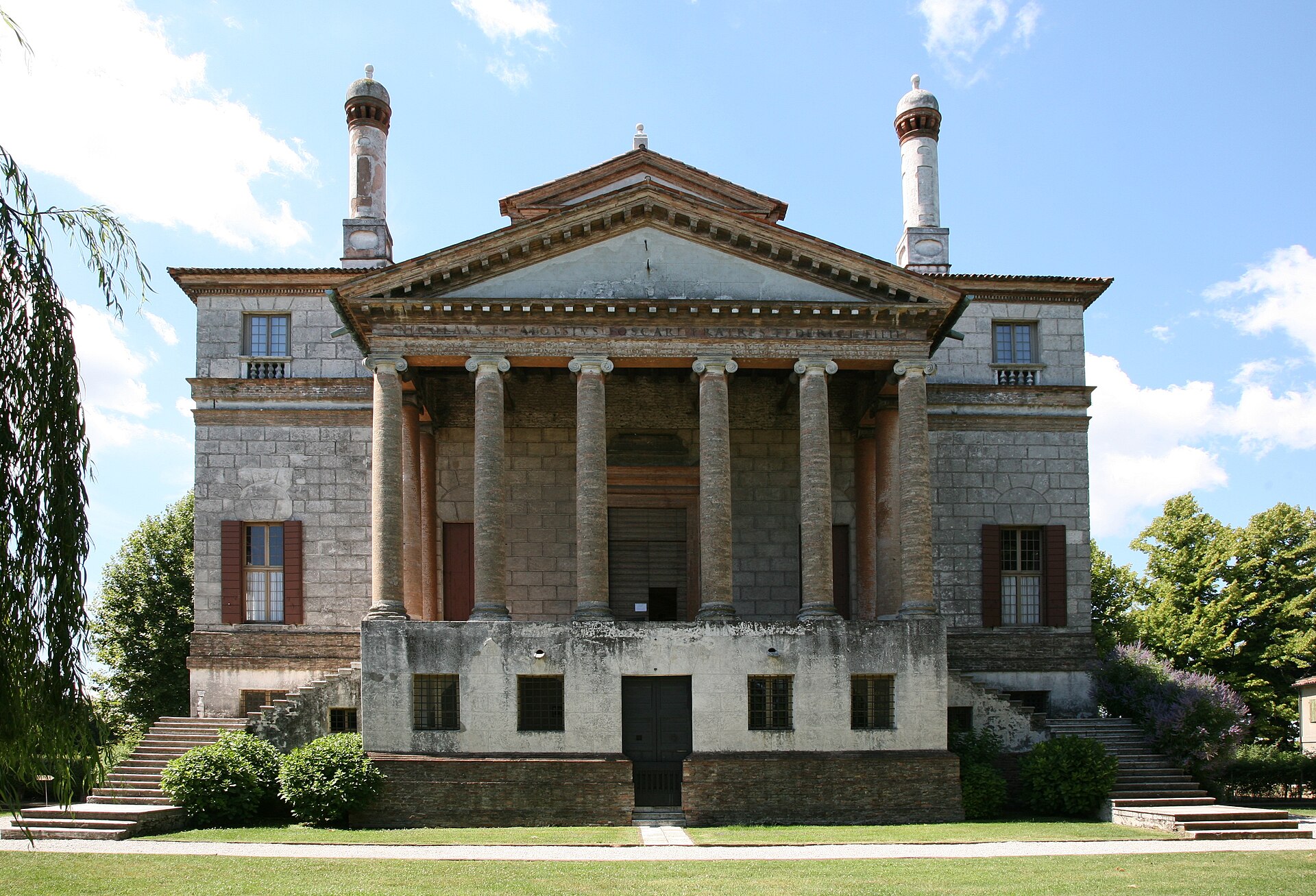 Photo: Hans A. Rosbach / Wikimedia Commons — CC BY-SA 3.0
La Rotonda is the most radical: a perfectly central plan, four identical pronaoi turned towards the landscape, a dome above the circular hall. It has no barchesse because it was conceived not as a farm but as a villa of pleasure, and it is precisely for this reason the exception that best explains the rule. Villa Barbaro at Maser shows the other side of the coin: Palladian architecture and a fresco cycle by Veronese fused into a single masterpiece. Villa Emo, in the Treviso countryside, is instead the illustrated manual of the complete type — main house, access ramp, long symmetrical barchesse — and the ideal stop for understanding how a villa-estate really worked.
La Malcontenta, along the Riviera del Brenta has a portico on a high base to create an elevated point away from flood waters and also for visual effect creates a scenic view by orienting the portico toward the water. The Villa Cornaro at Piombino Dese introduces the double order of superimposed porticos as part of the facade: this design would be replicated in America's mansions in the Southern States and even in some designs created by Thomas Jefferson.
How the model spread: from Palladio's villas to "ordinary" villas
Palladio's architectural genius is based on an idea that has been both creative and productive, as well as reproducible through his buildings. For two centuries after their publication, the Four Books, with their engravings, were used by master builders and lesser architects across the entire territory of the Serenissima as a catalogue of solutions. Palladianism — literally "the style of Palladio" — was born when thousands of Venetian villas spoke Palladio's language. These villas had never been built or designed by Palladio himself; however, they employed many elements common in all of his designs such as a central portico; symmetry; side barchesse surrounding a farm courtyard.
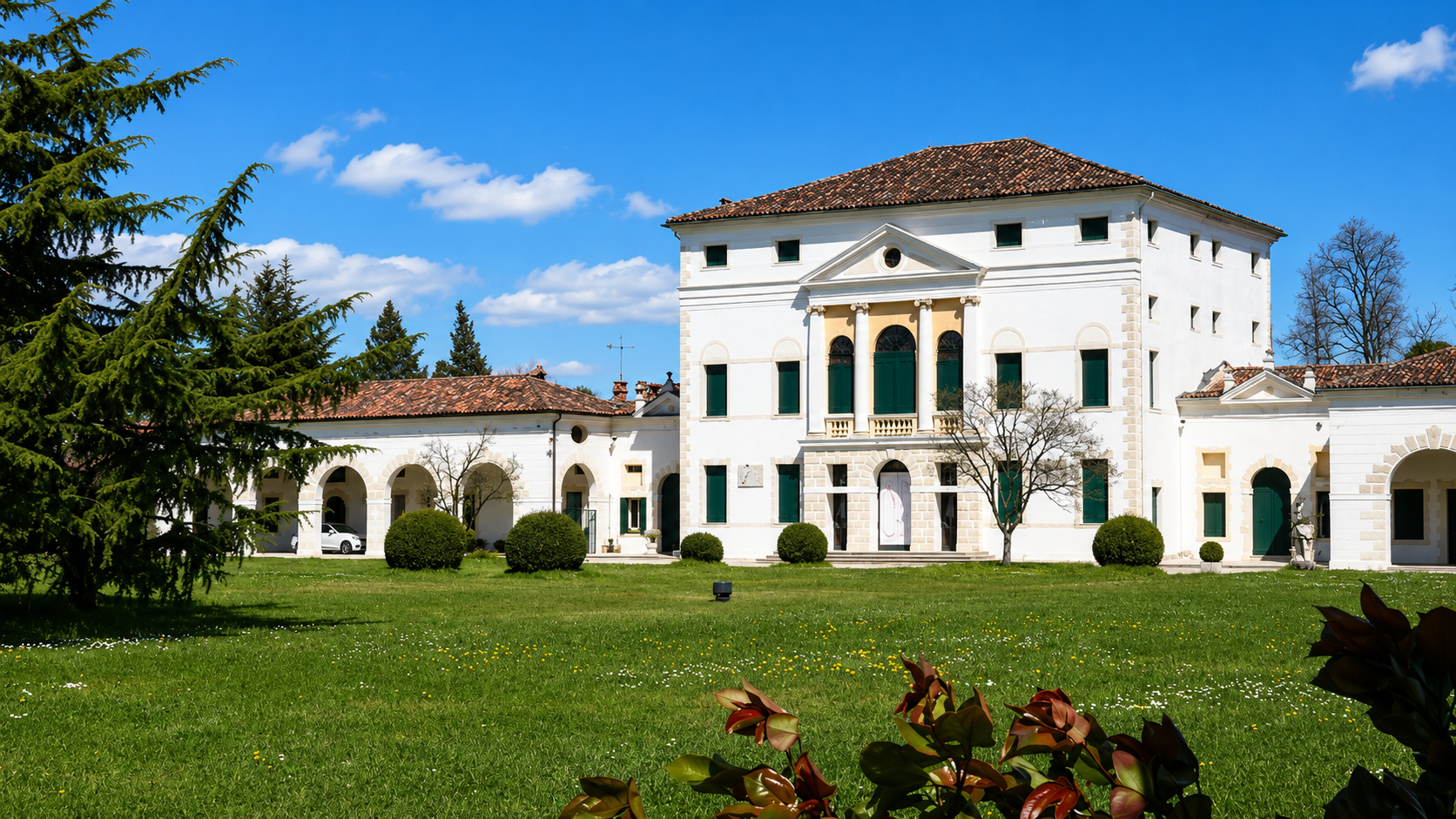
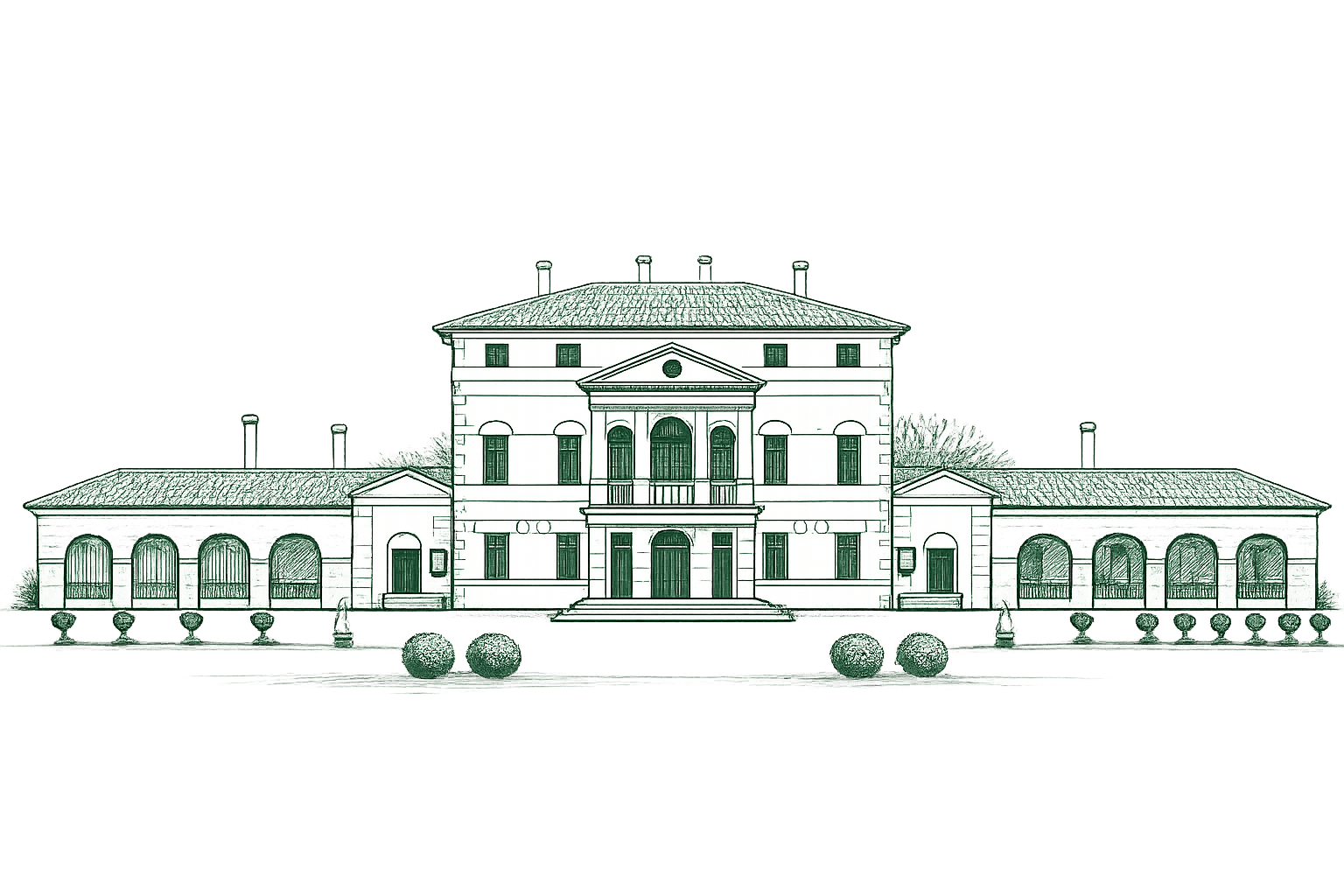
This is exemplified in Villa Loredan Valier Perocco di Meduna, at Vascon di Carbonera in the Treviso countryside: a main house from the late seventeenth and eighteenth centuries, two arcaded barchesse, an oratory and a frescoed hall; all located within a park supplied with spring water. It was not designed by Palladio, yet it is clear that its grammar inherited from him — the courtyard defined by the barchesse, the symmetrical arrangement of buildings and their relationship to one another as well as between buildings and the surrounding land (countryside) can be seen to follow similar principles when compared to La Rotonda or Villa Emo; looking at the photographs of these structures in addition to those in the gallery help to demonstrate this principle at different scales; therefore, the Palladian language was able to define much of the Veneto landscape far beyond the two dozen signed villas.
FAQ
How many Palladian villas are UNESCO World Heritage Sites? There are twenty-four villas attributed to Andrea Palladio included in the UNESCO property "City of Vicenza and the Palladian Villas of the Veneto", inscribed in 1994 and extended to the villas in 1996, together with the Palladian buildings of the city of Vicenza.
Which is the most famous Palladian villa? Villa Almerico Capra, known as La Rotonda, near Vicenza: a central plan with four identical porticoes and a dome, it is the most imitated Palladian building in the world and the purest synthesis of his ideas.
Is Villa Loredan a Palladian villa? No, it was not designed by Palladio. It is a Venetian villa of Palladian layout: it takes up his language — a symmetrical main house and arcaded barchesse — like thousands of other residences built in the Veneto after the Four Books had spread.
In summary
In essence, Palladian villas use the vocabulary developed by Andrea Palladio - a main house; a portico with pediments; barchesse; and harmonic proportions. To find this vocabulary at its most basic look at La Rotonda, Villa Barbaro, and Villa Emo. Then look at La Malcontenta and Villa Cornaro for examples of variations on the model. However, that vocabulary has also been used to create many ordinary residential villas of the region as well. Reading a residence such as Villa Loredan through Palladio's lens is the best way to understand how strongly his language defined the Veneto. Continue your exploration of the other Venetian Villas to visit or learn about the villa's journal.
Sources: UNESCO — City of Vicenza and the Palladian Villas of the Veneto, Istituto Regionale per le Ville Venete (IRVV). Opening hours and visiting arrangements are indicative: always check the official websites of the individual villas before setting out.
Would you like to see the Villa in person?
The Villa is a private residence. Visits and receptions in Vascon di Carbonera are arranged by appointment only.
Make an enquiry →